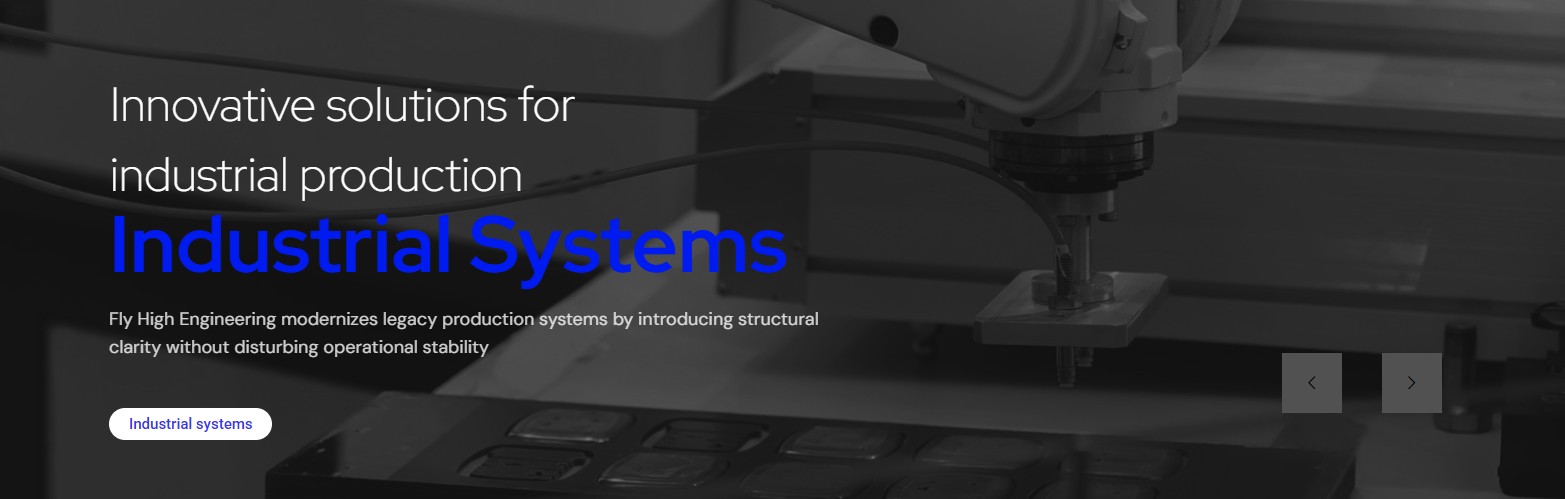
Industrial companies with a long history often rely on plants, machinery, and automation systems that have evolved over decades. In many cases, these assets continue to perform reliably, ensuring operational continuity and stable production output.
However, as markets become more competitive and digital transformation accelerates, new challenges emerge. Organizations need better access to operational data, greater process visibility, improved maintenance strategies, and stronger integration across the business.
When discussing digital transformation, many companies immediately think about replacing existing infrastructure with entirely new systems. Yet, a full replacement is not always the most effective path. Legacy system modernization often provides a more sustainable, lower-risk, and higher-return alternative.
Legacy systems are not inherently problematic because of their age. In fact, they often embody years of engineering knowledge, operational experience, and continuous adaptation to business needs. The real challenge lies in the complexity that accumulates over time, making integration, data accessibility, and system management increasingly difficult.
Here are seven reasons why modernizing legacy systems has become a strategic priority for industrial organizations.
1. Reduce Operational Risk Without Disrupting Production
One of the greatest advantages of modernization over complete replacement is business continuity.
For many manufacturers, production systems represent the core of daily operations. Shutting down a production line for weeks or months to implement a new infrastructure can lead to significant costs, lost productivity, and substantial operational risk.
A modern modernization strategy focuses on preserving what already works while improving the areas that create bottlenecks, inefficiencies, or technological limitations. This approach allows companies to introduce improvements incrementally without compromising system stability.
By thoroughly assessing the existing architecture, organizations can identify critical issues, prioritize interventions, and implement changes in a controlled manner, minimizing downtime and maintaining uninterrupted operations.
2. Gain Greater Visibility into Production Processes
Many industrial systems remain mechanically efficient and highly reliable, yet offer limited capabilities when it comes to collecting, processing, and sharing operational data.
In an increasingly data-driven manufacturing environment, this lack of visibility can become a significant obstacle.
Modernization enables companies to build a structured data architecture capable of monitoring machine status, production performance, energy consumption, and operational efficiency in real time.
Access to reliable information supports better decision-making, helps identify inefficiencies before they become costly problems, and creates a solid foundation for continuous improvement initiatives.
Organizations that successfully transform shop-floor data into actionable insights gain a significant competitive advantage over those still operating with disconnected or largely manual processes.
3. Enable Seamless Integration with ERP, MES, and Business Systems
One of the most common limitations of legacy environments is their inability to communicate effectively with modern business platforms.
Today, companies rely on advanced software solutions for planning, logistics, production management, quality control, and reporting. When operational systems cannot exchange information efficiently with these platforms, organizations face data silos, duplicated activities, and increased risks of human error.
Modernization bridges the gap between operational technology and enterprise systems.
This integration eliminates manual data entry, accelerates information flow, improves traceability, and creates a more connected operational environment.
The ability to connect existing machinery with ERP and MES platforms is often a critical success factor for companies pursuing digital transformation without replacing their entire production infrastructure.
4. Improve Maintainability and System Understanding
Over time, many industrial systems become increasingly difficult to understand and manage.
Years of modifications, incomplete documentation, and control logic developed by different teams can transform a production system into a “black box” that only a few individuals fully understand.
When critical knowledge is concentrated in a small number of experienced technicians, organizations become vulnerable. Staff turnover, retirement, or the loss of key personnel can create serious maintenance and operational challenges.
Modernization helps restore architectural clarity through system analysis, documentation, and the reorganization of control logic.
A clearer system structure simplifies maintenance activities, reduces troubleshooting time, and makes knowledge transfer significantly easier across the organization.
5. Extend the Lifespan of Valuable Industrial Assets
Replacing machinery and industrial equipment requires substantial capital investment, which is not always justified.
Many legacy systems remain mechanically sound and continue to perform their production tasks effectively. In these situations, the objective should not be replacement, but enhancement.
Targeted modernization initiatives can significantly extend the useful life of existing assets while introducing new capabilities and improved connectivity.
This approach allows organizations to maximize the value of previous investments, allocate financial resources more efficiently, and avoid unnecessary capital expenditures.
Modernization becomes a practical way to improve return on existing assets while maintaining high standards of reliability and operational performance.
6. Build a Foundation for Future Innovation
Legacy modernization should not be viewed as a purely technical exercise.
It is a strategic decision that directly influences an organization’s ability to innovate and remain competitive in the years ahead.
A modernized infrastructure provides the foundation required for advanced analytics, predictive maintenance, artificial intelligence, industrial IoT initiatives, and next-generation automation technologies.
Systems that have been modernized are inherently more adaptable and better prepared to integrate future innovations than fragmented and outdated environments.
Companies investing in modernization today gain greater flexibility and are better positioned to respond quickly to evolving customer expectations, market demands, and technological advancements.
7. Deliver Measurable Business Value
Every technology initiative should ultimately be evaluated based on the business value it generates.
The goal of legacy system modernization is not to adopt new technology for its own sake or simply follow industry trends. The objective is to achieve measurable operational and financial outcomes.
Benefits often include reduced downtime, improved productivity, fewer operational errors, greater cost visibility, and more informed decision-making through data-driven insights.
A business-focused modernization strategy helps organizations prioritize projects that deliver the highest impact with the lowest level of risk and the strongest return on investment.
Companies that embrace this mindset can transform legacy systems from perceived obstacles into strategic assets that support growth, efficiency, and innovation.
Conclusion
Legacy system modernization should be considered far more than a technology upgrade. It is a strategic investment that enables industrial organizations to protect existing assets, reduce operational risk, and prepare for future challenges.
In an increasingly competitive manufacturing landscape, the ability to leverage data, integrate processes, improve maintainability, and support emerging technologies has become a critical success factor.
Rather than replacing infrastructure that still performs its intended function effectively, many organizations are choosing a smarter and more sustainable approach: modernizing what already exists while introducing greater clarity, connectivity, and measurable business value.
Companies that pursue this path can achieve higher efficiency, stronger operational control, and a robust technological foundation for their ongoing digital transformation journey.
For legacy system modernization contact https://www.fly-high-engineering.ch/